Current paper: Revision 16 PDF, September 29. Checked 25-page PDF with four pages of main text, incorporating the Medical Corps Career Development Board proposal and financial-scope limitations. Revision 10 Word source and review notes are historical development materials; the Word source does not include the later revisions.
Final course project for BUS 620 — Micro and Macro Economics. Compensation, retention, opportunity-cost analysis, pension sensitivity, staffing alternatives, source reviews, and both labs are components of this one project. The Navy is the modeled case; the project title does not imply validation for every military service.
Historical: formatted long working PDF, the September development version that the condensed paper replaced.
Dated draft chain · Current internal-medicine figure · Scenario calculation audit
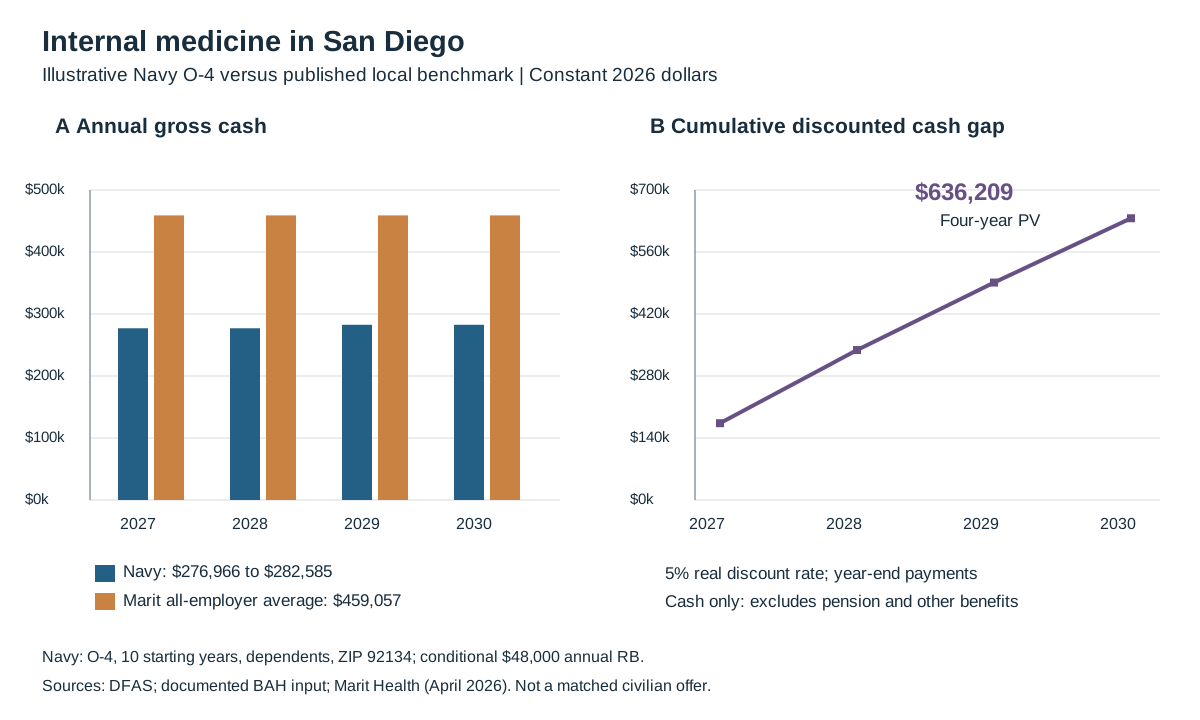
quick-lab.html) now redirects to Stay or go?, which includes its GMO-to-residency comparison; the old version remains in git history.The current paper and lab use a 5% real discount rate for cash pay and, since September 29, a separate 3% real rate for pension and retiree-health value (near long-term Treasury real yields, because BRS retired pay is inflation-adjusted and federally backed), with year-end cash flows. The paper’s primary example is a board-certified O-4 general internist just past 10 years, with dependents in San Diego. Previous O-5 fixed inputs and beginning-of-year present values remain historical material only.
Earlier package versions preserve nonidentical material that was previously duplicated in this folder. They are historical references, not alternate current deliverables. Canonical files are linked above.
Keep the HTML pages, calculation modules, reference data, tests, and PDF library together in this project. Run the existing checks from the project folder:
node tests/check-calculation-engine.mjs
node tests/check-special-pay-and-pension.mjs
node tests/check-stay-or-go.mjs
When you change Stay or go?, update the version in both version.json and the page (PAGE_VERSION and the visible version line); the test checks they match. Open copies of the page compare themselves with version.json and reload once if they are out of date, so a shared link always shows the current version.
The older economic-research/quick-lab.html and economic-research/physician-pay-lab.html addresses redirect here. Course-required brief/spec entry points outside the project are links only. The root prompt log remains the course-wide session record.
build_comparison.py retains the earlier bonus-comparison scenarios and writes generated files into this project’s outputs/ directory; those outputs do not replace the paper’s fixed scenario.
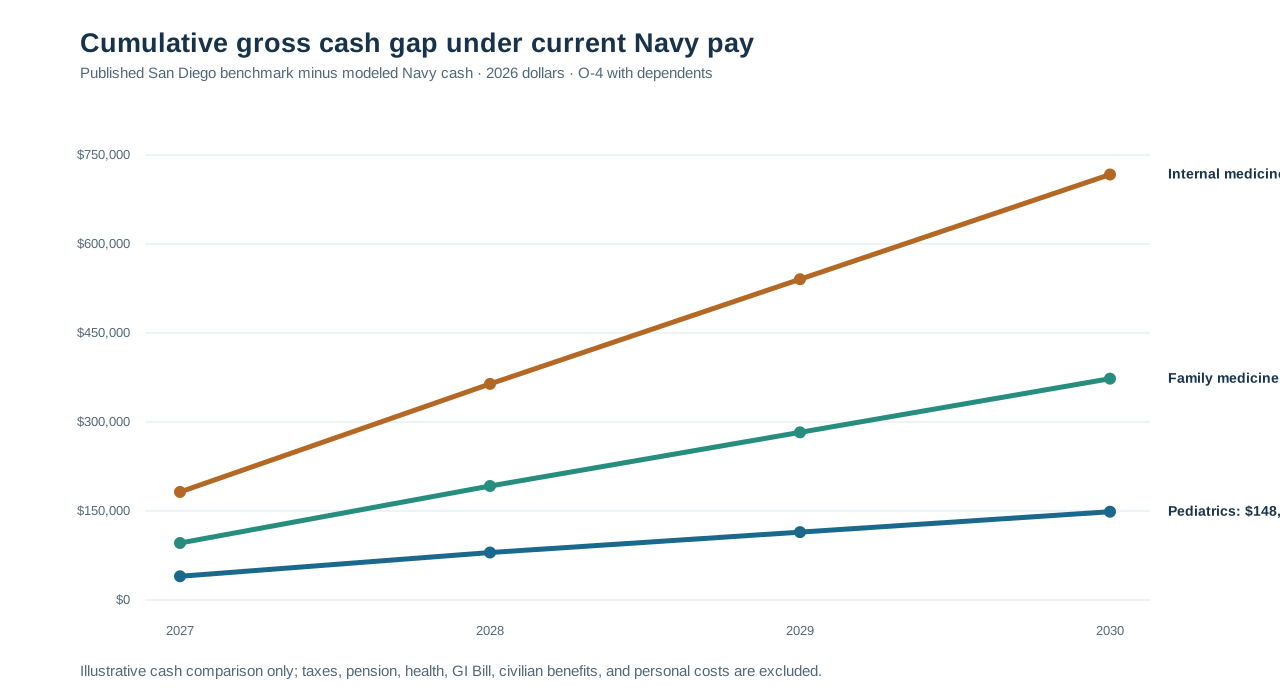
This capability studies Navy primary-care physician retention in San Diego as a local labor-market case within a Pacific medical-readiness challenge. Naval Medical Forces Pacific is headquartered in San Diego and supports commands across the region. The project compares current compensation for general pediatrics, general internal medicine, and family medicine while keeping pay gaps, retention behavior, and readiness outcomes distinct.
Exercised in: research brief · model specification · 12-row analysis · cumulative-gap figure · opportunity-cost and retention decision · author-supplied paper draft. No final submission is designated yet; the latest condensed draft and earlier working versions are distinguished above.
The course economics crosswalk maps relevant chapters of Frank et al.’s Principles of Economics (4th ed.) to the paper and model. It separates textbook decision rules from empirical Navy pay and retention evidence.
The brief records the author’s opportunity-cost research question and validation approach. The spec defines sources, named inputs, calculations, figure requirements, and acceptance checks. The current paper uses the documented O-4 internal-medicine scenario at 5%, with an itemized cash baseline and a San Diego market benchmark. Its figure and calculation table report a conditional four-year cash gap of $636,208.84. Pension eligibility is addressed explicitly; cash-only results do not value later pension rights. No retention elasticity or optimal bonus is inferred.
The interactive Physician Pay Gap Lab is a supplemental sensitivity tool. It accepts rank, physician, civilian-pay, and benefit assumptions and calculates a present-value financial gap and year-by-year cash comparison under current compensation. Its San Diego Marit benchmarks are citywide, not ZIP-specific. The lab maps any duty-station ZIP in the 2026 DoD BAH crosswalk to the relevant housing area and fills BAH for O-4 through O-6; unmapped ZIPs require a verified manual amount. It can also compare a conditional active-duty pension with an optional Reserve pension, using projected points and pay-start age. The lab does not estimate retention or operational-readiness effects.
Stay or go? includes a GMO-to-residency illustration (moved from the former Quick Look) for family medicine, pediatrics, and internal medicine. It compares national PGY-level civilian stipends with Navy resident cash, then compares national specialty attending benchmarks over a selected post-training service horizon. A completed intern year may leave two residency years rather than three; the user selects whether PGY-1 credit is granted. The selected horizon illustrates a possible service path and is not a determination of individual obligated service. Navy GME policy requires BUMED to calculate it before training. The illustration excludes taxes, pension, TSP, health benefits, certification pay, and retention bonuses.
The operational link is documented in the Naval Medical Forces Pacific region and mission pages; the project still needs specialty-level staffing and deployment outcomes before claiming a readiness effect.
The consolidated decision record connects the pay-gap analysis to opportunity cost, incentives, marginal analysis, present value, compensating wage differentials, and labor-supply elasticity.